
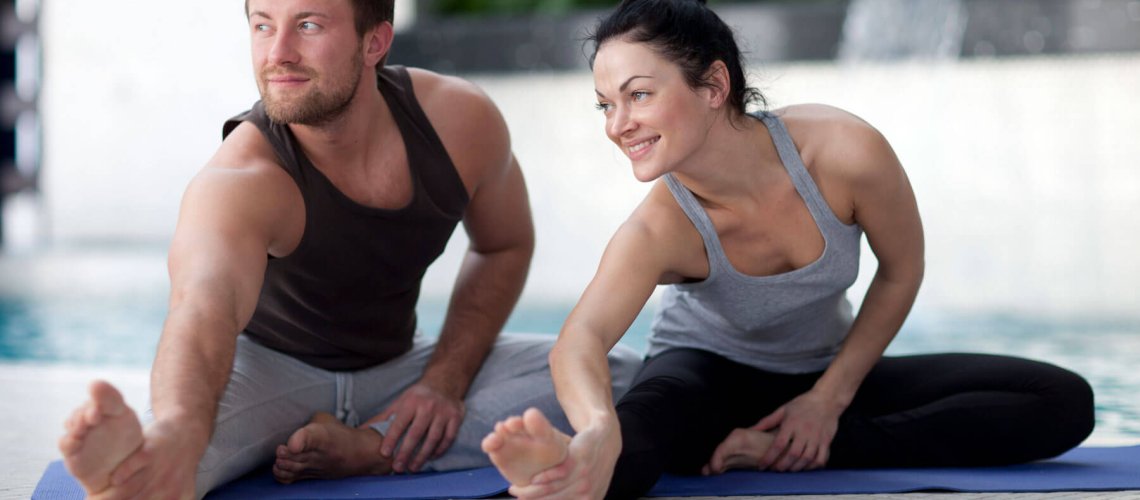

Reggie, a recently retired plumber, explains that he has experienced increasing stiffness in his hips, knees, shoulders, and neck over the last decade. He doesn’t think that there is much that will help with age-related problems like this, so he has not “wasted his money on physio or chiropractic treatments”.
His wife has been gently suggesting that he try yoga or Tai Chi for years but he hasn’t been interested. While he was working he could usually stay distracted to keep his mind off the pain. He learned over the years to make adjustments for the stiffness and expresses some pride in becoming more and more tolerant of his neck pain and the associated headache.
He tells you that recently his wife “sat him down and told him that he needed to do something about all this”. She explained to him that she had noticed that his usually optimistic outlook has faded, that he is using more over-the-counter meds or alcohol to get to sleep, and that he finds excuses to stay at home rather than getting out with friends when the social gatherings include physical activities. What bothered him the most, and made him come to see you is that she told him that he wasn’t acting like the strong, rugged, energetic man she knew he was.
Reggie only knows yoga as something flexible people do, and something that helps people relax. He tells you that he has never been flexible, and has often been criticized because he loves sitting and “doing nothing”. He tells you that he doesn’t know how yoga therapy could help with getting older, but his wife is telling him to do it.
How might you respond? And what sort of plan comes to mind?
So much of yoga can be used to affect our energy, influence pain, and address stiffness. What will we do about Reggie’s apparent belief that age-related changes and pain are inevitable, and his apparent belief that these are outside of his influence? And does it matter that his stated motivation seems more related to his partner’s desires than his?
There are so many nuances here, so many approaches we could try, and so many threads on which to pull. Let’s focus on Reggie and his readiness to change. It seems that Reggie is contemplating making the change of adding yoga to his life. Previously he was not even considering this as potentially helpful – he was pre-contemplative, not even considering that he could use yoga to help him with his stiffness and pain. Now that he is in the contemplative stage, this means that he is thinking about making a change.
Reggie is probably thinking about the potential negatives of making this change (how will practising yoga impact his sense of self, what will his friends say, how does a guy know what to wear to yoga, …), and the positives of not making the change (he can learn how to ignore the pain even better without yoga, it will save him some money to do it on his own, he won’t have to get up so early for the classes his wife attends, …). Knowing more about contemplation, we might spend a little time talking to Reggie about the pros and the cons of adding yoga and the pros and the cons of not adding it.
Yet Reggie, like most people who are contemplative needs us to do two things – build a
therapeutic alliance and provide him with knowledge. Specifically, he requires information to help convince him that change is possible and that techniques and practices of yoga can help him to his goals. A trusting relationship and increased understanding seem to be the only two consistently effective interventions that help people move from contemplating change into action – from thinking about it to moving into the actual behaviours of making change.
If the first thought you had was to provide knowledge through talking to Reggie, or by providing him education about pain, yoga, and stiffness with a video, a handout, or an infographic, please consider that many of us learn best through embodied experiences. How do we provide Reggie with an experience that yoga practice can help him with his stiffness, or his pain, or even make him feel more energetic, youthful, or confident in his body? When he experiences change, this is embodied education – a powerful form of knowledge acquisition.
Positive experiences of change can also add to Reggie’s motivation. He respects his wife, and he values her suggestions. We can make goals with him that align with his values around his relationships as well as goals related to what we believe is possible to change. The body is resilient, and pain science supports that we typically have some influence over pain. When we provide Reggie with an effective combination of awareness, regulation, and movement practices that allow him to move his hips, knees, shoulders, or neck with more ease, and that provide him some relief from pain, this is education that can move him from the contemplation stage to the action stage of change. It also builds the trust required to continue to challenge his abilities.
Repeating these experiences will help him remain in this stage of action, and help to turn this initial improvement into lasting changes. It may also shift his stated motivation for practising yoga towards more than “my partner told me I should do this”, which for Reggie might increase the likelihood of success in decreasing his stiffness and pain, and in enhancing his relationships. Reggie, a recently retired plumber, explains that he has experienced increasing stiffness in his hips, knees, shoulders, and neck over the last decade. He doesn’t think that there is much that will help with age-related problems like this, so he has not “wasted his money on physio or chiropractic treatments”.